
Innovation Without Compromise: Enabling Safety & Reliability in Embedded Finance
December 22, 2025


As we close out the year and I reflect on countless lessons and conversations, it’s clear that embedded finance is growing up.
For the last decade, innovation in financial services has often been defined by speed and accessibility: faster payments, faster onboarding, and banking capabilities embedded into existing products. That phase unlocked enormous opportunities and value for consumers.
However, even amid all this innovation, what people care about most when it comes to their money hasn’t really changed. At the end of the day, people care that their money is safe and that it is moved when and how it’s supposed to.
These expectations don’t disappear just because banking is faster or more accessible. If anything, the expectations get higher. To meet them, the banks that enable embedded finance still need to provide the safety and reliability that people expect.
This year reinforced that embedded finance doesn’t fail because of ambition, it fails because of operations. Embedded finance succeeds when product decisions are made with operational reality in mind.
Many of my conversations this year with bank leaders revolved around how they can support embedded finance without fragmenting data, duplicating processes, or weakening existing controls. These conversations have shaped how I think about Synctera’s responsibility to our bank partners.
These banks have existing systems and processes that are fine-tuned to protect people’s money and foster reliability in the financial ecosystem. Rather than asking banks to change how they manage risk or compliance, we’ve focused on adapting to what already works. Flexibility needs to be built into our platform’s architecture, data flow, and design so that embedded finance programs can be seamlessly integrated into a bank’s existing operations.
Whether that’s supporting existing AML providers, enabling data exports into downstream systems, or centralizing visibility across programs, the goal is the same: give banks the tools they need to provide safe, reliable banking services at scale.
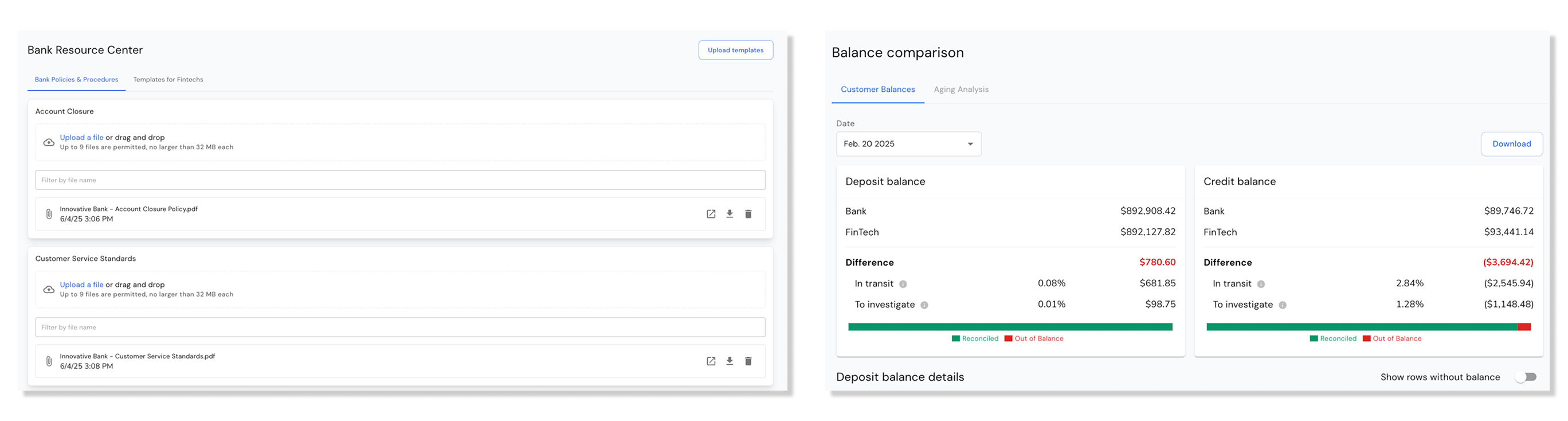
This principle guided much of what we built this year, from expanded bank-facing program tooling and compliance reporting to improvements in reconciliation and program visibility. Everything we do at Synctera is rooted in a commitment to making embedded finance easier to operate, not harder.
Looking ahead, I’m excited about how we will be able to harness agentic AI to responsibly support banking operations. I believe money management will always include a human element; however, AI can help reduce manual work, surface risk faster, allow teams to focus on better decision-making, and elevate how work gets done without compromising accountability.
The next phase of embedded finance won’t be defined by who moves fastest, but by who operates best. Scaling embedded finance shouldn’t require banks to tear down the compliance and risk frameworks they’ve spent decades building, which is why we’re focused on building the tooling that banks need while ensuring our platform supports the systems they already have.
The ones who win in embedded finance will be the companies that simplify complexity, improve transparency, and help banks and FinTechs innovate with confidence. That’s the future we’re building toward at Synctera, and the standard embedded finance must meet as it continues to mature.
Product
Great banking products get built and scaled on Synctera’s end-to-end platform

.svg)